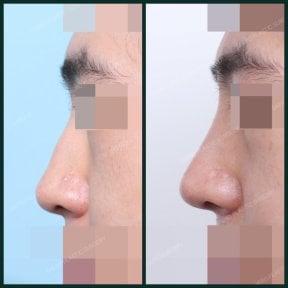
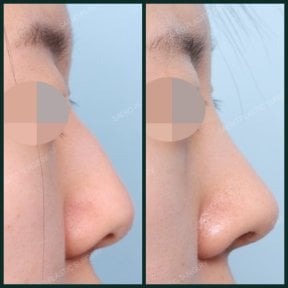
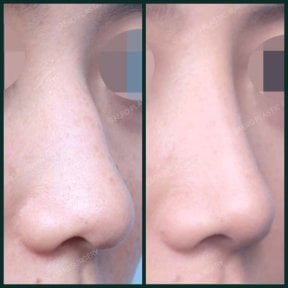
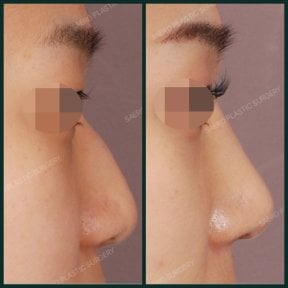
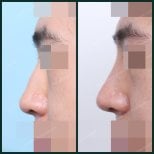
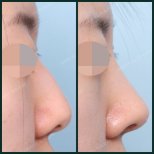
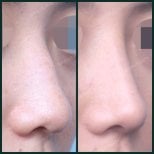
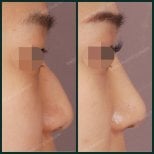
Usunięcie garbu nosa w Korei Południowej kosztuje zazwyczaj od $3,800 do $6,800. Ostateczna cena zależy od złożoności zabiegu, konieczności osteotomii oraz użycia własnej chrząstki pacjenta. W Polsce podobne zabiegi kosztują średnio około $5,300. Pacjenci oszczędzają około 28% w porównaniu z cenami w Polsce. Pakiet często obejmuje transfery z lotniska, wielojęzyczną koordynację oraz zabiegi zmniejszające obrzęk po operacji.
Opinia ekspercka Bookimed: Renomowane kliniki w Seulu oferują wysoką jakość dzięki specjalistycznej wiedzy i zaawansowanym systemom bezpieczeństwa. JK Plastic Surgery Center działa od 20 lat i wykonało ponad 85 000 udanych zabiegów. Z kolei VG Plastic Surgery posiada akredytację KOIHA i przyjmuje pacjentów z 47 krajów. Wybór sprawdzonych ośrodków gwarantuje dostęp do certyfikowanych chirurgów, takich jak Park Sangwook czy Kang Moon Seok. Zagraniczni turyści mogą odebrać na lotnisku zwrot podatku VAT w wysokości od 7 % do 10 %.
| Republika Korei | Turcja | USA | |
| Korekcja garbu nosa | od $3,800 | od $2,359 | od $11,500 |
Day 1
Day 2
Day 3
Day 4
Day 5
Week 1
Week 2
Weeks 3-6
Week 8
Month 3
Please note that each case is individual and the timeline may vary.
Certyfikowany chirurg plastyczny i obecny dyrektor VG Plastic Surgery, specjalizujący się w zabiegach nosa.
Dr. Seung‑Hyung Noh is a board-certified plastic and reconstructive surgeon. He has extensive experience in revision surgery for major aesthetic procedures. He is known for managing complex revision cases that call for sound judgment and precise technique.
He earned his medical degree from Hanyang University College of Medicine. He completed training in plastic and reconstructive surgery at Hanyang University Hospital. He also completed a clinical training program at Columbia University in New York.
His approach puts safety, balance, and natural results first. He avoids overtreatment and uses the least necessary intervention. He is a full member of major Korean plastic surgery societies, including KSPRS.
Certyfikowany chirurg plastyczny specjalizujący się w rynoplastyce, członek pięciu prestiżowych koreańskich towarzystw chirurgicznych.
Dr Jooyoung Park łączy wiedzę z zakresu estetyki precyzyjnej z popartymi badaniami technikami usuwania garbu nosowego w klinice BIOFACE.
Surgeons in South Korea primarily use open rhinoplasty for moderate humps and closed rhinoplasty for minor refinements. Advanced techniques include piezoelectric ultrasonic bone contouring and traditional osteotomy. Surgeons often combine hump reduction with dorsal augmentation or tip-plasty to ensure facial harmony and structural stability.
Bookimed Expert Insight: Data from top Seoul clinics like JK Plastic Surgery shows a high preference for hybrid approaches. Surgeons often pair hump reduction with tip refinement using septal or ear cartilage. This addresses the common hawk nose profile while maintaining a natural-looking bridge height instead of over-shaving.
Patient Consensus: Patients value 3D simulations during consultations to choose between open or closed techniques. Many emphasize that focusing on facial harmony prevents a collapsed look after aggressive bone removal.
International patients undergoing nasal hump removal in South Korea should plan for a 10 to 14-day stay. This timeframe allows for essential post-operative monitoring, including initial wound care and the mandatory stitch removal typically scheduled around day 7 to ensure travel safety.
Bookimed Expert Insight: Data from high-volume Seoul clinics shows a trend toward 10-day minimum stays to prevent mid-flight complications. While some patients attempt to leave by day 5, our records indicate increased risks of severe altitude-induced swelling and hematomas for those rushing their departure.
Patient Consensus: Patients emphasize staying at least 2 weeks to manage persistent stuffiness and ensure they are fit for the long flight home. Many suggest booking flexible tickets and staying in specialized recovery housing near Gangnam for easier access to follow-up care.
South Korea offers high-quality non-surgical alternatives to nasal hump removal, primarily using liquid rhinoplasty and thread lifting to camouflage dorsal bumps. These procedures use hyaluronic acid fillers or PDO threads to create a straighter nasal profile without surgery, incisions, or extended downtime in Seoul-based clinics.
Bookimed Expert Insight: Many patients at high-volume centers like BIOFACE Clinic or SAERO Plastic Surgery choose `trial` fillers before surgery. Dr. Jooyoung Park has trained over 300 physicians in these techniques, proving that refined injector skill is more critical than the specific filler brand used.
Patient Consensus: Patients report that fillers in Gangnam effectively camouflage about 70% of a hump for up to 12 months. Most advise visiting experienced injectors rather than discount walk-in clinics to ensure natural-looking results and avoid migration.