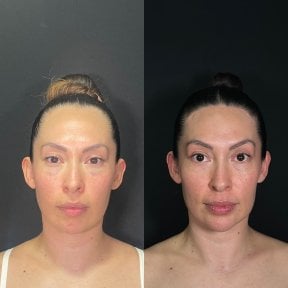
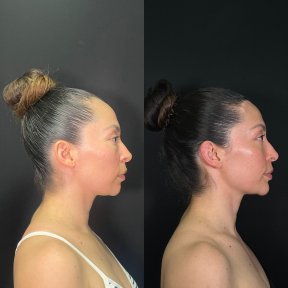
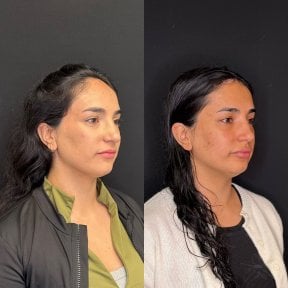
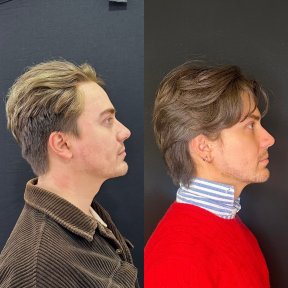
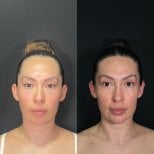
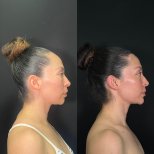
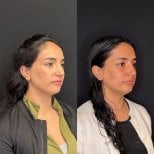
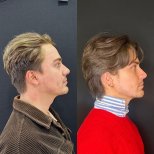
Modelowanie czoła w Meksyku kosztuje zazwyczaj od $3,200 do $5,800. Ceny zależą od metody, lokalizacji kliniki oraz doświadczenia chirurga. W Polsce podobne zabiegi kosztują średnio około $5,300. Pacjenci oszczędzają około 40% w porównaniu z polskimi cenami. Koszt obejmuje zazwyczaj honorarium chirurga, znieczulenie oraz opłaty za korzystanie z zaplecza medycznego. Główne ośrodki to Meksyk, Tijuana i Guadalajara.
Opinia ekspercka Bookimed: Wybór specjalisty, takiego jak dr Jose Cortes w Meksyku, gwarantuje fachową wiedzę. Jest on pionierem technik ultradźwiękowych oraz członkiem ASPS i ISAPS. Najlepsze meksykańskie kliniki, jak José Cortés Institute, osiągają skuteczność do 99 %. Centra te oferują specjalistyczną opiekę czaszkowo-twarzową w cenie będącej ułamkiem polskich kosztów. Wybieranie certyfikowanych chirurgów w Meksyku zapewnia najwyższą jakość usług na tańszym rynku.
| Turcja | USA | Meksyk | |
| Konturowa plastyka czoła | od $1,593 | od $10,000 | od $3,200 |
Państwo nie płacą za usługi Bookimed. Ceny na konturową plastykę czoła na stronie odpowiadają cennikowi kliniki. Płatność dokonywana jest bezpośrednio w klinice po przyjeździe. Dostępna jest płatność w ratach.
Bookimed dba o Państwa bezpieczeństwo. Współpracujemy tylko z klinikami spełniającymi wysokie międzynarodowe standardy w przeprowadzaniu konturowej plastyki czoła. Posiadają one wymagane licencje do obsługi pacjentów międzynarodowych na całym świecie.
Bookimed oferuje bezpłatną pomoc i wsparcie. Osobisty koordynator medyczny pozostaje w kontakcie przed, w trakcie i po podróży. Nie będą Państwo sami w innym kraju podczas procedury Konturowa plastyka czoła.
Day 1
Day 2
Day 3
Day 4
Day 5
Day 6
Week 1
Week 2
Week 3-4
Week 6
Please note that each case is individual and the timeline may vary.
Specialist in General Surgery at Hospital General de México. Subspecialist in Plastic and Reconstructive Surgery at Hospital General Dr. Manuel Gea González. Medical degree from Universidad Anáhuac del Norte. Advanced training in Hand Surgery at Hospital Ángeles del Pedregal. Additional training in Peripheral Nerve and Facial Paralysis at Hospital General Dr. Manuel Gea González.
Attending Plastic and Reconstructive Surgeon at the National Institute of Pediatrics. Head of the Continuing Medical Education Committee at AMCPER (2016–present). Associate Professor in the UNAM‑coordinated Experimental Microsurgery Training Course. Congress coordinator and lecturer.
Honors include the 2016 International Travel Grant from the American Society for Reconstructive Microsurgery. First place in the FILACP International Residents Competition (2014). Winner of the Gea Puis Research Contest (Jan 2014). First place in the 42nd National Residents Competition Dr. Fernando Ortiz Monasterio (2013).
Dr Blasquez specjalizuje się w zaawansowanej chirurgii plastycznej twarzy, w tym w konturowaniu czoła, a jego wykształcenie jest potwierdzone przez wiodące instytucje w Meksyku.
Dr Jose Cortes jest uznawany za jednego z najlepszych chirurgów plastycznych w Meksyku, specjalizującego się w chirurgii estetycznej i rekonstrukcyjnej.
To verify a plastic surgeon in Mexico, you must confirm two government-issued licenses and board certification by the Mexican Council of Plastic, Aesthetic, and Reconstructive Surgery (CMCPER). Check names in the official National Registry of Professionals database for specialty-specific credentials in plastic surgery.
Bookimed Expert Insight: For bone-shaping procedures like forehead contouring, look for surgeons with specific craniofacial subspecialties. Dr. Jose Cortes at José Cortés Institute holds a high specialty in Craniofacial Surgery. This extra credential ensures expertise in the facial bone anatomy required for safe contouring beyond soft tissue work.
Patient Consensus: Patients emphasize that clinic websites often claim certification without providing legal registration numbers. Real-world insights suggest cross-referencing license numbers through official government registries rather than trusting social media profiles or coordinator promises.
For forehead contouring in Mexico, prioritize facilities holding Joint Commission International (JCI) accreditation or the Mexican General Health Council (CSG) certification. These ensure safety standards match US levels. Verified clinics like Jose Cortes Institute also maintain affiliations with the American Society of Plastic Surgeons.
Bookimed Expert Insight: While many patients focus on surgeon fame, clinic data shows that top-rated centers in Mexico City and Mexicali prioritize dual-certification. Clinics like Hospital de la Familia combine Mexican CSG accreditation with a boutique 32-room setup. This balance provides hospital-grade safety with the specialized care typical of smaller private facilities.
Patient Consensus: Patients emphasize looking beyond cosmetic branding to verify if a facility has a dedicated, in-house anesthesia team. They recommend choosing hospitals with 24/7 physician coverage and ICU access for invasive bone work like forehead contouring.
Forehead bone contouring recovery involves 1 to 2 weeks for returning to routine activities. Full cosmetic results typically require 3 to 12 months as swelling resolves. Patients must manage inflammation through head elevation and specialized care while the facial skeleton and nerves heal from shaving or setbacks.
Bookimed Expert Insight: Surgeons at the José Cortés Institute often use craniofacial techniques that prioritize long-term nerve health. While many clinics offer bone shaving, our data shows that specialized craniofacial training is vital for sinus setbacks. Patients should confirm their surgeon holds Mexican Council of Plastic Surgery (CMCPER) certification to ensure safe facial skeleton remodeling.
Patient Consensus: Recovery is more about managing persistent swelling than controlling pain. Expect to wait at least 4 to 6 weeks before feeling socially comfortable, as results often look worse before they improve.
Forehead shaving reshapes the underlying frontal bone to smooth a prominent brow ridge, while hairline lowering removes forehead skin to physically move the scalp forward. These procedures target different anatomical layers, bone versus soft tissue, to address profile projection or vertical forehead height.
Bookimed Expert Insight: Patients often prioritize hairline lowering for front-facing results, but the most balanced outcomes in Mexico come from specific specialists like Dr. Jose Cortes. His advanced training in craniofacial surgery allows for deeper frontal sinus contouring that standard surgeons may avoid. Choosing a dual-specialized surgeon in Mexico City ensures that both skin tension and bone thickness are managed safely in one session.
Patient Consensus: Many patients find that lowering the hairline looks more dramatic from the front, but shaving is essential for a softer side profile. Combining both helps avoid an unnatural look if the forehead remains too convex after the scalp is moved.
Skilled surgeons in Mexico strategically place forehead contouring incisions within the hair or along the hairline to prevent visible facial scarring. Most procedures leave no permanent marks on the face. Advanced techniques like trichophytic beveling allow hair to grow through scars, making them virtually undetectable.
Bookimed Expert Insight: Mexico is a global hub for craniofacial expertise. Surgeons like Dr. Jose Cortes at the Jose Cortes Institute hold specialized qualifications in craniofacial surgery, not just general plastics. Our data shows these specialists prioritize structural bone work through scalp-entry points. This approach avoids facial incisions entirely unless a hairline lowering is specifically requested.
Patient Consensus: Many patients find that keeping their hair density high is more important than the scar itself. While the mark is hidden, some notice temporary hair thinning near the incision during early healing.
Mexican medical tourism packages for forehead contouring typically include surgeon fees, anesthesia, operating room charges, and diagnostic 3D imaging. These bundles offer substantial savings, costing $3,200 to $5,800, which is roughly 70% less than the $15,000 average in the United States.
Bookimed Expert Insight: High-volume centers like José Cortés Institute emphasize craniofacial expertise, as surgeons here often hold additional specializations in bone reconstruction. When comparing quotes, verify if the package covers actual bone contouring or just soft-tissue brow work. Bone-based procedures always require a formal CT scan, which top Mexican clinics typically bundle into the initial price.
Patient Consensus: Patients value the concierge-style service but emphasize getting an itemized quote to confirm if prescriptions and revision care are covered. Many recommend staying in a dedicated recovery house to manage healing comfortably after significant facial bone work.
Patients should plan to stay in Mexico for 7 to 14 days after forehead contouring. This timeframe allows for monitoring peak swelling and professional removal of sutures or drains. Staying locally ensures access to your surgeon should any post-operative facial adjustments or wound care be necessary.
Bookimed Expert Insight: For many patients, choosing a clinic like Hospital de la Familia in Mexicali simplifies recovery logistics. Its location steps from the California-Mexico border allows patients to recover in local private rooms and potentially drive home. This avoids airplane cabin pressure risks entirely during the critical first week of healing.
Patient Consensus: Many note that feeling ready to fly is different from being medically cleared for pressure changes. Building in a 3-day buffer prevents rushing through essential post-operative checks and drain removals.