Na stronę główną
Oświadczenie reklamodawcy

Discover the Best Clinics and Costs for Rak esicy treatment in 2026

Najlepsze kraje do leczenia Rak esicy na świecie to Turcja, Republika Korei i Tajlandia — na podstawie 274 zapytań pacjentów i 101 zweryfikowanych klinik w ponad 50 krajach. Te kierunki oferują najlepszy balans jakości leczenia, doświadczenia specjalistów i przystępności cenowej, z cenami nawet do 95% niższymi niż w USA.

Oszczędź do

95%

w porównaniu do średnich cen w Wielkiej Brytanii lub USA

Dane z 101 zweryfikowanych klinik w 30 krajach
Kierownik działu marketingu treści

Jak to działa

Zmieniliśmy proces wyszukiwania kliniki, czyniąc go prostym, szybkim i spersonalizowanym.
Proszę odpowiedzieć na kilka pytańProszę wypełnić krótki formularz, aby opowiedzieć nam o swoim stanie zdrowia i potrzebach medycznych.
Proszę otrzymać spersonalizowane oferty3 kliniki, wybrane na podstawie Państwa odpowiedzi, przedstawią spersonalizowane programy i ceny.
Proszę wybrać najlepszą opcjęProszę porównać oferty i wybrać klinikę, która najbardziej Państwu odpowiada.
Mogą Państwo również przejrzeć wszystkie 101 klinikę poniżej.

Jaka jest cena procedur diagnostycznych i leczenia raka esicy? Proszę dowiedzieć się teraz

Średnia cena diagnostyki i leczenia raka esicy wynosi $17,230, minimalna — $1,200, maksymalna — $39,870.
Dane zweryfikowane przez Bookimed na July 2026, na podstawie zapytań pacjentów i oficjalnych wycen z 101 klinik na całym świecie. Koszty mediany opierają się na rzeczywistych fakturach (2025–2026) i są aktualizowane co miesiąc. Rzeczywiste ceny mogą się różnić.

Turcja: Najlepszy kraj do leczenia Rak esicy na świecie – od $1,200

Turkey leads in sigmoid adenocarcinoma care by combining surgical innovation with rapid diagnostics. Specialized centers in Istanbul perform 500,000+ patient procedures annually. They use the Da Vinci Robotic System for precise tumor removal. Patients often start treatment within 2 days of arrival.

  • Exclusive surgical techniques: Dr. Vafi Atalay at Anadolu performs the unique Wafi procedure for colorectal cases.
  • Global medical standards: Hospitals like Memorial Şişli were the first in Turkey to earn JCI accreditation.
  • Rapid diagnostic turnaround: Centers provide PET/CT and biopsy results within 1 to 2 days typically.
  • High-volume expertise: Surgeons like Dr. Kivanc Derya Peker have performed 400+ complex gastric surgeries.

Bookimed Expert Insight: Turkey's top oncology centers, like Anadolu Medical Center, maintain a strategic affiliation with Johns Hopkins Medicine. This partnership ensures patients receive treatment following identical U.S. clinical protocols. Highly specialized procedures, such as the Wafi tube ileostomy, are exclusively available at these authorized institutions.

What patients say: Patients note the speed of receiving CT and colonoscopy results is surprising. They frequently mention returning to work within 4 weeks after successful stage II resections. Many highlight that private hospitals in Istanbul provide high-quality care at a very realistic pace.

Anadolu Medical Center

Republika Korei: Najlepszy kraj do leczenia Rak esicy – od $16,500

In the Republic of Korea, Sigmoid adenocarcinoma treatment is advanced, with Joint Commission International accrediting hospitals like Samsung Medical Center, Asan Medical Center, and Seoul National University Bundang Hospital (SNUBH). Samsung Medical Center's Comprehensive Cancer Center utilizes Novalis, IGRT, and Da Vinci systems. Asan Medical Center excels in organ transplants and oncology. SNUBH, Korea's first digital hospital, uses the BESTcare system.

Innovative procedures include laparoscopic surgery, robotic-assisted surgery, targeted therapy, and immunotherapy, improving Sigmoid adenocarcinoma survival rates. Samsung Medical Center's Comprehensive Cancer Center is involved in developing new therapies. For detailed statistics, refer to the study here.

Ewha Womans University Medical Center

Meksyk: Najlepszy kraj do leczenia Rak esicy – od $2,000

Mexico is emerging as a destination for Sigmoid adenocarcinoma treatment, with clinics like Holistic Bio Spa® and Alivia Clinica Monterrey offering advanced care. Treatments include exosome therapy, peptides, plasmapheresis, NK cell therapy, and hyperbaric ozone therapy. Although specific survival rates in Mexico are not widely published, these therapies contribute to a holistic approach.

Holistic Bio Spa® serves around 5,000 patients annually, mainly from the USA, Canada, Europe, and Latin America. Alivia Clinica Monterrey is part of Mexico's oncology care landscape. Organizations in Mexico, including those accredited by the Joint Commission International, enhance the country's reputation for quality care. For survival rate statistics, refer to the National Center for Biotechnology Information here.

Wybór kraju do leczenia Rak esicy za granicą nie powinien być zgadywaniem. Pomogliśmy ponad ponad 1 milionowi pacjentów, więc wiemy, które miejsca łączą najlepszych specjalistów, najbezpieczniejsze szpitale i przystępne ceny. Jesteśmy tu, by pomóc Ci znaleźć właściwy.

Dlaczego właśnie my?

Wasz osobisty lekarz-koordynator Bookimed

  • Zapewnia wsparcie na wszystkich etapach
  • Pomaga wybrać odpowiednią klinikę i lekarza
  • Zapewnia szybki i wygodny dostęp do informacji
Autor
Anna Leonova
Anna Leonova
Kierownik działu marketingu treści
Certyfikowany autor tekstów medycznych z ponad 10-letnim doświadczeniem, odpowiada za wiarygodność treści Bookimed. Posiada tytuł magistra filologii, przeprowadzała wywiady z ekspertami światowymi.
Fahad Mawlood
Redaktor medyczny, Data Scientist
Lekarz ogólny, laureat 4 konkursów prac naukowych młodych naukowców. Pracował na Bliskim Wschodzie. Były kierownik zespołu anglojęzycznych i arabskojęzycznych lekarzy-koordynatorów. Obecnie zajmuje się analizą danych i jest redaktorem medycznym strony.
Fahad Mawlood Linkedin

Wszystko, co trzeba wiedzieć o Rak esicy

faq image

Join an oncology support group for patients and their families


Here you will find:

  • updates on trips for medical treatment abroad, opening of borders,
  • up-to-date and useful information about the fight against cancer around the world,
  • live broadcasts with leading foreign doctors,
  • stories and testimonials of those who have undergone cancer treatment abroad,
  • answers to questions that concern you,
  • support from people who understand you.

Join the Facebook group


Types of tumors of the sigmoid colon

The most common types of sigmoid tumors are:

  • Polyps and villous tumors . Benign tumors occur in different parts of the large intestine. This type of tumor is characterized as a precancerous condition of the sigmoid colon.
  • Adenocarcinoma . The most common type of colon cancer. Doctors diagnose adenocarcinoma of the sigmoid colon in 80% of cases.
  • Signet cell carcinoma . The tumor accounts for 3-4% of all oncology of the sigmoid colon. It is characterized by rapid metastasis and spread to nearby organs.

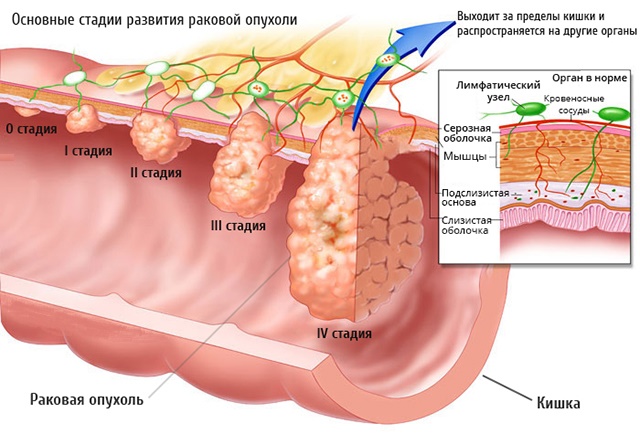
Stages of development of sigmoid colon cancer

stage 1 sigmoid colon cancer

  • The neoplasm is localized in the mucous membrane or submucosal layers of the sigmoid colon.
  • The size of the tumor is up to 15 mm.
  • Metastases are absent.
  • Symptoms: often absent, rarely appears blood in the feces.

2 degree sigmoid colon cancer

  • The size of the neoplasm is up to half the diameter of the sigmoid colon.
  • The tumor may remain within the intestinal mucosa (cancer subspecies 2a). Subtype 2b - the tumor has grown into the wall, metastases have appeared in the nearby lymph nodes.
  • Symptoms: bloating, belching, digestive system disorders (not related to meals), blood in the stool.

3 degree sigmoid colon cancer

  • The neoplasm has spread to more than half the diameter of the intestine.
  • There are two subspecies: without metastases (3a) and with the appearance of metastases in the nearest lymph nodes (3b).
  • Symptoms are supplemented by excessive fatigue and pain in the left side of the intestine. Pain is caused by the fact that the tumor interferes with the patency of the intestine.

stage 4 sigmoid colon cancer

  • An extensive tumor grows into other organs (rectum, bladder).
  • May metastasize to distant lymph nodes.
  • Symptoms are complemented by a sharp weight loss (up to 5 kg per month) and a deterioration in the functioning of the organs into which the cancer has metastasized.
faq image

Diagnosis of sigmoid colon cancer

To increase the effectiveness of treatment, it is important to undergo a comprehensive diagnosis at the first symptoms of the disease. It should include:

  • a blood test for tumor markers, which allows you to distinguish a benign tumor from a malignant one;
  • a colonoscopy with a biopsy so that the doctor determines the location of the tumor and obtains its tissue for further examination;
  • CT of three cavities (thoracic, abdominal and pelvic organs), which allows the doctor to determine the stage of development of sigmoid colon cancer.

Treatment options for sigmoid colon cancer

When a patient has a tumor in the sigmoid colon, doctors use the following treatment methods:

  • Surgical operation . The doctor determines the type of intervention after a complete examination of the patient and staging of the cancer.
  • Chemotherapy. Treatment prevents cancer cells from dividing and slows down tumor growth. Chemotherapy for sigmoid colon cancer cannot replace surgery and is an alternative treatment for an inoperable tumor with metastases.
  • Radiation therapy. The procedure stops cell division and reduces the size of the neoplasm. For cancer of the sigmoid colon, doctors use radiotherapy as an adjunct to surgery.

How is sigmoid colon cancer surgery performed?

Depending on the stage and complexity of the course of the disease, doctors perform two types of operations: faq image
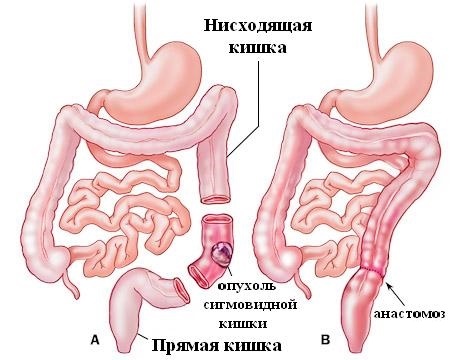
  • minimally invasive;
  • radical.

Minimally invasive surgery

Doctors prescribe the method for cancer of the sigmoid colon in the early stages. The surgeon performs all actions by endoscopic method, without incisions on the skin.

radical surgery

During the abdominal operation, the doctor performs a resection (removal) of the affected area and restores the integrity of the operated intestine. When the tumor grows into other tissues, it may be necessary to remove nearby lymph nodes. In difficult cases, the doctor completely excised the sigmoid and rectum, after which it forms a temporary colostomy (artificial anus).

Prognosis after treatment for sigmoid colon cancer

  • At stages 1-2, 95 out of 100 patients live for 5 years.
  • At grades 3 and 4, the prognosis depends on the prevalence of the disease. If there are no metastases, 74 patients out of 100 live for more than 5 years. If cancer cells have spread to other organs, only 30-40 patients.

Wszystko, co trzeba wiedzieć o Rak esicy

faq image

Join an oncology support group for patients and their families


Here you will find:

  • updates on trips for medical treatment abroad, opening of borders,
  • up-to-date and useful information about the fight against cancer around the world,
  • live broadcasts with leading foreign doctors,
  • stories and testimonials of those who have undergone cancer treatment abroad,
  • answers to questions that concern you,
  • support from people who understand you.

Join the Facebook group


Types of tumors of the sigmoid colon

The most common types of sigmoid tumors are:

  • Polyps and villous tumors . Benign tumors occur in different parts of the large intestine. This type of tumor is characterized as a precancerous condition of the sigmoid colon.
  • Adenocarcinoma . The most common type of colon cancer. Doctors diagnose adenocarcinoma of the sigmoid colon in 80% of cases.
  • Signet cell carcinoma . The tumor accounts for 3-4% of all oncology of the sigmoid colon. It is characterized by rapid metastasis and spread to nearby organs.

Stages of development of sigmoid colon cancer

stage 1 sigmoid colon cancer

  • The neoplasm is localized in the mucous membrane or submucosal layers of the sigmoid colon.
  • The size of the tumor is up to 15 mm.
  • Metastases are absent.
  • Symptoms: often absent, rarely appears blood in the feces.

2 degree sigmoid colon cancer

  • The size of the neoplasm is up to half the diameter of the sigmoid colon.
  • The tumor may remain within the intestinal mucosa (cancer subspecies 2a). Subtype 2b - the tumor has grown into the wall, metastases have appeared in the nearby lymph nodes.
  • Symptoms: bloating, belching, digestive system disorders (not related to meals), blood in the stool.

3 degree sigmoid colon cancer

  • The neoplasm has spread to more than half the diameter of the intestine.
  • There are two subspecies: without metastases (3a) and with the appearance of metastases in the nearest lymph nodes (3b).
  • Symptoms are supplemented by excessive fatigue and pain in the left side of the intestine. Pain is caused by the fact that the tumor interferes with the patency of the intestine.

stage 4 sigmoid colon cancer

  • An extensive tumor grows into other organs (rectum, bladder).
  • May metastasize to distant lymph nodes.
  • Symptoms are complemented by a sharp weight loss (up to 5 kg per month) and a deterioration in the functioning of the organs into which the cancer has metastasized.

faq image

Diagnosis of sigmoid colon cancer

To increase the effectiveness of treatment, it is important to undergo a comprehensive diagnosis at the first symptoms of the disease. It should include:

  • a blood test for tumor markers, which allows you to distinguish a benign tumor from a malignant one;
  • a colonoscopy with a biopsy so that the doctor determines the location of the tumor and obtains its tissue for further examination;
  • CT of three cavities (thoracic, abdominal and pelvic organs), which allows the doctor to determine the stage of development of sigmoid colon cancer.

Treatment options for sigmoid colon cancer

When a patient has a tumor in the sigmoid colon, doctors use the following treatment methods:

  • Surgical operation . The doctor determines the type of intervention after a complete examination of the patient and staging of the cancer.
  • Chemotherapy. Treatment prevents cancer cells from dividing and slows down tumor growth. Chemotherapy for sigmoid colon cancer cannot replace surgery and is an alternative treatment for an inoperable tumor with metastases.
  • Radiation therapy. The procedure stops cell division and reduces the size of the neoplasm. For cancer of the sigmoid colon, doctors use radiotherapy as an adjunct to surgery.

How is sigmoid colon cancer surgery performed?

Depending on the stage and complexity of the course of the disease, doctors perform two types of operations: faq image

  • minimally invasive;
  • radical.

Minimally invasive surgery

Doctors prescribe the method for cancer of the sigmoid colon in the early stages. The surgeon performs all actions by endoscopic method, without incisions on the skin.

radical surgery

During the abdominal operation, the doctor performs a resection (removal) of the affected area and restores the integrity of the operated intestine. When the tumor grows into other tissues, it may be necessary to remove nearby lymph nodes. In difficult cases, the doctor completely excised the sigmoid and rectum, after which it forms a temporary colostomy (artificial anus).

Prognosis after treatment for sigmoid colon cancer

  • At stages 1-2, 95 out of 100 patients live for 5 years.
  • At grades 3 and 4, the prognosis depends on the prevalence of the disease. If there are no metastases, 74 patients out of 100 live for more than 5 years. If cancer cells have spread to other organs, only 30-40 patients.

Uzyskać bezpłatną konsultację

Proszę wybrać wygodny sposób komunikacji